Исламское страхование
Post-merger performance of Islamic banks
This study explores the impact of financial metrics, specifically Return on Assets (ROA) and Return on Equity (ROE), on stock values in Islamic banking in Pakistan.
Introduction
Islamic banking has undergone significant transformations and adaptations, making it a dynamic and innovative industry (Iqbal et al., 2023). This is largely because Shariah-compliant banks play a critical role in managing public funds efficiently, contributing significantly to economic development (Iqbal et al., 2023; Hamid et al., 2023). In Shariah banking, the primary function is not just profiting generation but also creating value by aligning financial operations with Islamic principles. Over time, as banks expand and make their offerings more accessible to the general public, financial performance becomes a critical indicator for evaluating their success and sustainability.
The role of Shariah banking is pivotal in driving economic growth and development, and by taking the organization public, it creates an opportunity for investors to buy into the future potential of the institution. Through listing on the stock exchange, the financial performance of these banks can be analyzed in depth, enabling better resource management and increasing the availability of capital to further stimulate growth (Putri et al., 2020). Consequently, Shariah banks are well-positioned to become valuable instruments for advancing economic prosperity.
The capital markets, particularly stock exchanges like the Pakistan Stock Exchange (PSE), have become increasingly vital as they provide an avenue for financial institutions and investors to raise capital and generate wealth (Putri et al., 2020). As stock prices fluctuate based on market dynamics, they reflect the economic health of the organizations involved. This creates a feedback loop where the financial performance of a bank directly influences its stock price and, by extension, its ability to raise funds and grow further.
With the increasing number of financial participants in the PSE, the exchange has the potential to evolve into a more prosperous and influential market. This growing activity indicates a positive trajectory, as financial institutions seek to maximize profit potential by increasing market activity and improving their financial health (Musa et al., 2021). Investors, as well, analyze such financial performance measures as return on property (ROA) and return to equity (ROE) to make a good decision-making choice. The PSE, therefore, holds significant promise for continued growth and investor engagement, which in turn can lead to a more stable and profitable financial landscape (Qamar et al., 2023).
The decision to distribute profits is another aspect that can directly impact financial performance (Gunanta et al., 2021). It is a delicate balancing act for the board of directors, as profit distribution decisions can influence a bank's future profitability and stock prices. Thus, the management of financial resources and the allocation of profits need careful consideration to ensure sustainable growth and long-term success. A failure to manage profits effectively could undermine investor confidence, affecting stock prices negatively (Gunanta et al., 2021).
For investors financial records are one of the main tools to examine financial condition and future of the organization. By assessing financial statements, particularly profitability indicators like ROE and ROA, investors can gauge whether an organization is a sound investment (Sarwar et al., 2022). The relationship between an organization's financial performance and its stock prices cannot be overstated, as investors rely on these metrics to assess risk and potential returns (Iqbal et al., 2023).
Moreover, risk management plays a pivotal role in stock market operations (Zheng et al., 2022). Investors seek information about an organization's financial stability, risk factors, and growth potential before making investment decisions. A comprehensive financial report that provides transparent, accurate, and reliable information helps reduce risks and enhances security for investors. Factors such as stock prices, profitability margins, and overall financial health influence stock market trends. Therefore, a clear understanding of these financial metrics is essential for both investors and the organizations themselves (Zheng et al., 2022).
Apart from the internal financial performance metrics, macroeconomic factors such as inflation rates and currency fluctuations also impact stock prices (Egbuhuzor et al., 2021). These external factors can shape investor perceptions and influence their decisions. For instance, the impact of inflation on purchasing power can affect consumer behavior, while exchange rate volatility can influence the cost of doing business internationally. Recognizing these macroeconomic influences is critical to understanding the broader context in which Shariah-compliant banks operate.
Fundamental analysis remains a cornerstone in evaluating the potential of a stock, especially in the context of Islamic banking (Hartono, 2008). By analyzing key financial ratios such as ROE and ROA, investors can better understand a bank's profitability and efficiency (Arifin, 2002). A high ROE generally signals an organization’s ability to generate substantial returns from its equity, making it an attractive investment. Similarly, a strong ROA indicates efficient management of assets, leading to better financial health and, ultimately, higher stock prices (Ang, 1997).
Table 1 Share Value of Pakistan Shari’ah Bank Organization
Sr. | Year | Share Value (Closing) |
|---|---|---|
1 | 2016 | 2.291 |
2 | 2017 | 2.301 |
3 | 2018 | 2.041 |
4 | 2019 | 1.781 |
5 | 2020 | 1.606 |
6 | 2021 | 1.341 |
7 | 2022 | 1.551 |
Source: Statistics Secondary – 2023.
Therefore, the present value of an organization is critical to evaluating its worth. In this regard, the primary focus is on financial performance evaluation and assessment. Present value is an essential tool to accurately measure an organization's value. Factors outside of the organization's ratio have a greater effect, including local news that suggests that investors are logical. From 2016 to 2022, Pakistan Shari’ah Bank will achieve the following overall values. With the implementation of the right tools and strategies, Pakistan Shari’ah Bank is predicted to have a bright future ahead.
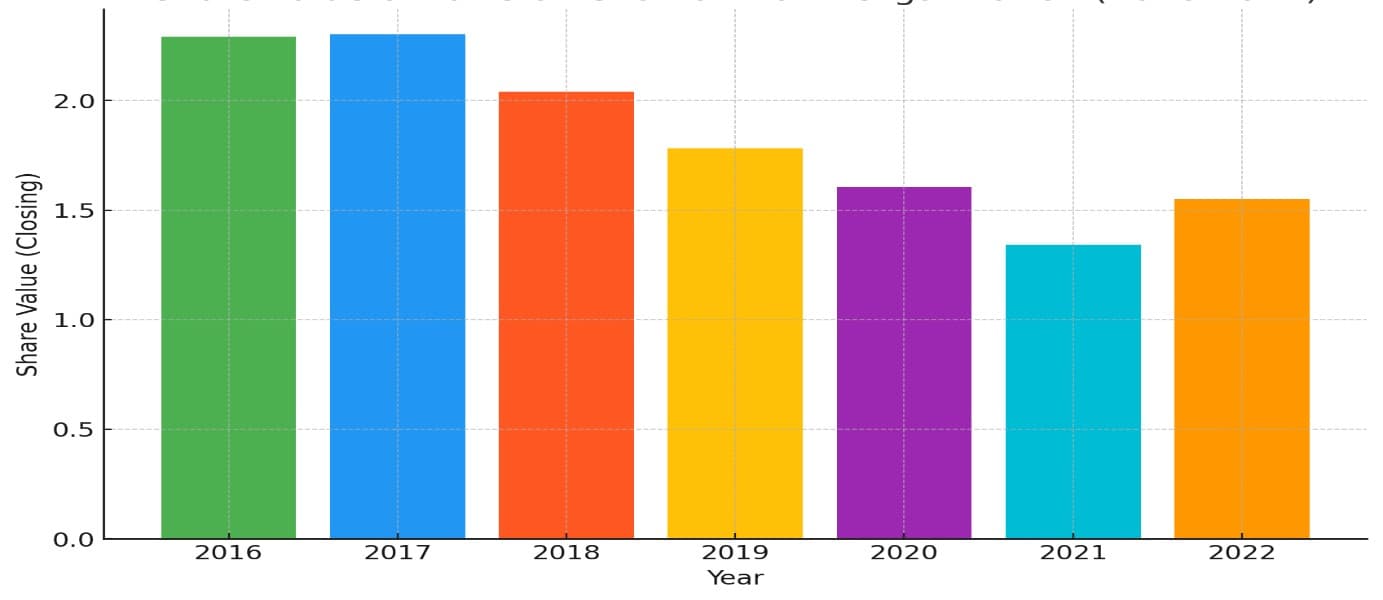
Picture 1. Pakistan Shariat Bank Organization share price from 2016 to 2022.
Source: Bar chart by the authors.
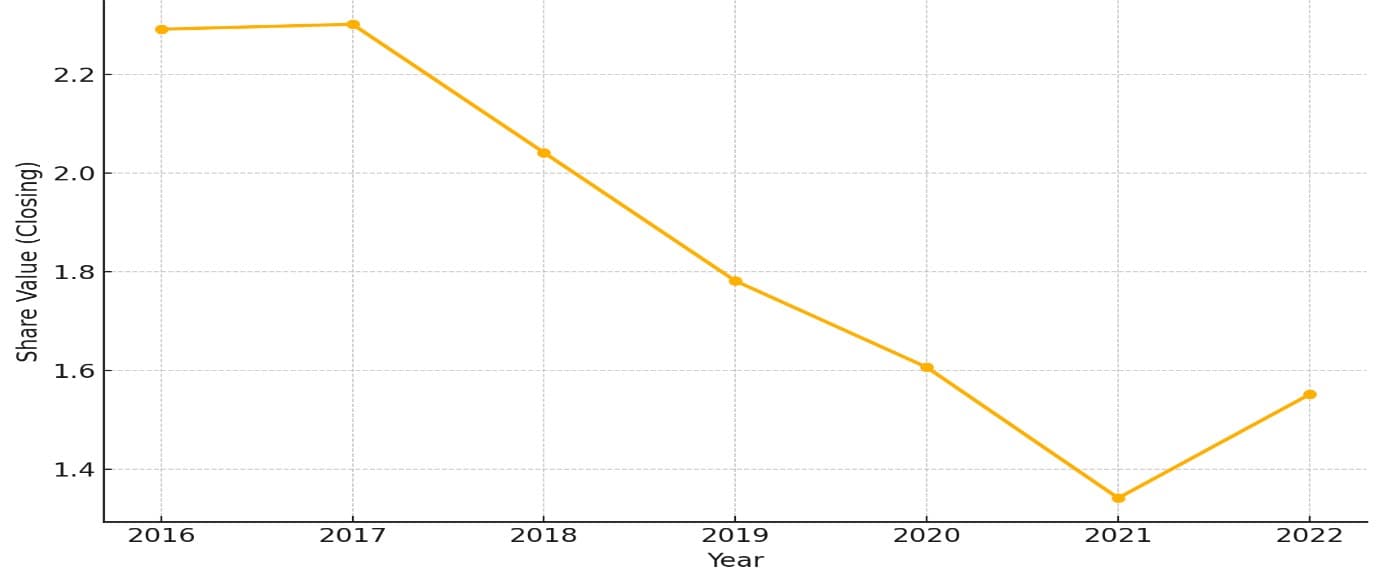
Picture 2. The stock value of Pakistan Shari'ah Bank Organization from 2016 to 2022. Source: line graph by the authors.
For one period in 2021 or each of the following years, it would appear that there will be an increase in the following year. This is Rs. 2.301/shares, but in the third year, this is Rs. 260 prices making Rs. 2.041/shares had a huge drop in the fourth year but then reverted back to rupee again. The suggestion price continued decreasing on 31 December 2021 to be 1,781/shares to be correct, and in 2022 up to the next one (31 June, 2022) in 2022. This decrease in the value of the stock suggests that the company must focus on developing strategies to ensure stable financial performance over a longer period of time. In addition to examining a company's financial statements directly, Lestari et al. (2013); Tandelilin (2001) recommend performing a financial ratio analysis. Financial ratio analysis can be a powerful tool for evaluating financial performance. Investors consider profitability one of the most significant indicators of future success. It is the ability of the investor's investment to provide returns appropriate for or commensurate with the magnitude of the investor's expectations. Ultimately, risk and return are two sides of the same coin, and investor success or failure is determined by how they balance them.
The integration of Islamic banking institutions through mergers and acquisitions presents a unique opportunity to analyze the effect of such corporate strategies on the financial performance of these organizations. Mergers can potentially improve operational efficiency, diversify offerings, and enhance profitability, but they can also introduce risks that affect stock prices. This study seeks to explore how mergers in Shariah-compliant banks influence financial metrics like ROA and ROE, which are critical to understanding their impact on stock prices.
While the literature has extensively explored the importance of ROA and ROE in evaluating financial performance, the specific impact of mergers within Islamic banking institutions has not been studied in detail. This gap in the research presents an opportunity to investigate the effects of mergers on the financial performance of Islamic banks, particularly in the context of Pakistan’s Shariah-compliant banking sector.
This study holds significant importance for several reasons: It fills a gap in existing research regarding the impact of mergers on Islamic banking financial performance, particularly in terms of ROA, ROE, and stock prices. The findings can provide valuable insights for financial institutions, investors, and policymakers in understanding the dynamics of mergers within Islamic banking and their effect on market performance. The study can help guide future corporate decisions, mergers, and acquisitions in the Islamic banking sector by shedding light on the financial implications of such moves.
Literature review
Financial performance refers to a high-level development that emphasizes firm profitability. Studies in this meta-analysis focus on the three main categories of CFP: marketbased (monetary investor returns), accounting (accounting returns), and managerial measures. Accounting-based measures such as income (EPS) per share, return on equity (ROE), Return on Assets (ROA), Return on Sales (ROS), and Return on Investment (ROI) are commonly used to assess the financial success of the organization. ROA and ROE are widely recognized as basic metrics for assessing financial success in strategy research. According to Dowell et al., Tobin's Q is a measure that takes into account not just a firm's return on assets (ROA) or return on equity (ROE), but also its intrinsic value, emphasizing the importance of being environmentally friendly. 2000. Organizational (nonmarket) actions do not attract market responses. Instead, they are influenced by internal decision-making capacities and managerial competence. The previous research uses share price admiration to emphasize market-based indicators such as price-income ratio, per share price, and increased economic performance of the organization. These actions focus on a company's financial performance, disregarding the specific impacts of pro-environmental practices on financial performance. Management is considered to have limited ability to impact market-based indicators. These guidelines reflect the concept that investors are a crucial group of partners whose satisfaction determines the firm's fate
The financial ratio is a measurement of an organization's show which should be clear from its ability to produce profits, indicating the ability to meet each of its commitment and is a component of the organization in creating value, which displays the ability of the organization in the future (Pahlevi et al, 2022). The organization should check its financial statements that determine their overall welfare. Financial ratio can be assessed by checking how operating activities compare with others. Financial ratios provide valuable insights into an organization’s performance, future potential and how it compares to other organizations (Iqbal et al., 2023). Mulyadi (2012) proposes that monetary ratios can be utilized to assess different factors of an organization, such as operational activities, organizational structure and personal performance. These ratios measure how well the organization fulfill its objectives and guidelines. Munawir (2012) suggest that monetary factors play an important role in assessing solvency and liquidity. A few of the economic indicators analyzed include business expansion, typical salaries, the overall size of enterprises, and the current status of operational funds (Rolianah et al., 2021).
Globalization has intensified industry competition. Therefore, various criteria are considered when evaluating corporations. Every financial actor in the market must identify the factors that limit the financial performance of companies when evaluating their performance. Prospective investors assess organizations' financial performance to make sound investment decisions. Company financial performance are quite significant (Fahmi, 2015). Depending on the organization, these borders are either indicators initiated by the organization or comprehensive financial indicators. Statistical ratios, as stated by Iqbal et al. (2023), are vital benchmarks that provide essential guidance for players on the financial market. The relationship between the financial performance of companies and numerous indicators is discussed in multiple studies. Certain studies concentrate on the characteristics that influence financial performance, while others examine the relationship between failure reasons and financial indicators. During COVID-19 and found a notable and favorable correlation between profitability, which is one of the measures of financial performance, and the size of the business. Kosa, Lang, and Netter conducted a study examining corporations' financial performance. The review analyzed the financial performance of organizations during COVID-19. It revealed that organizations implemented strategic changes during periods of low performance. Consequently, they reduced the number of employees, limited their areas of operation, and cut various expenses. A study conducted by Irawati (2006) analyzed the correlations between different financial indicators and stock returns on the NYSE and AMEX stock exchanges.
Roliah et al. (2021) It unequally shows the importance of returning on property (ROA) as an important metric to assess the success of the company and highlights the need to accept important importance while measuring performance. The formula (ROA) used to calculate the returns on assets is as follows: Return (ROA) on assets is determined by dividing the net income by total assets and multiplying the quotient by 100.
Investors often rely on an organization's financial data to decide whether to stay invested or consider other opportunities. Having accurate financial data is absolutely essential to organization success. Having a positive ratio within an organization can increase business value. Therefore, it is crucial for organizations to ensure that they maintain precise business records in order to improve their overall value as a company. Investors will choose to invest their funds in the organization, which will in turn increase its share value based on its importance. Or to put it another way, an organization's value influences its stock value. Ultimately, accurate financial data is key to organization success (Hutabarat et al., 2021). In contrast, knowledge of an organization’s cash flow ratios may be used for the following uses:
- Analyzing an organization's accomplishments over a predetermined period of time determines its success in carrying out its responsibilities. This evaluation can help the organization identify areas of improvement and success.
- To consider the association's size as a whole and assess each section's dedication to achieving the organization's overall goals. Overall, this evaluation can provide the organization with valuable insights into its performance and how to move forward.
- To be used as an explanation for future operating procedures. Therefore, this evaluation is essential to ensure long-term success.
- To guide the organization's overall operations, certain divisions or components of the organization, and the decision-making process. This evaluation is essential to the success of a business and should be conducted regularly.
- To act as the basis for investment policies to increase company productivity and efficiency. Regularly conducted evaluations are, therefore, necessary for any organization to ensure its future success.
Share value, according to Dividmojo et al. (2020), refers to the value of an individual's ownership position in a business. One of the many variations in share values on the capital market is the nominal price that the issuer establishes by valuing each share issued. This small value is shown on the share sheet. Thus, a share value is calculated based on the issuer's nominal price. Before the cost is reflected in a stock trade, it is known as the underlying cost. The amount of this initial price will be determined by the agreement between the underwriter and the issuer. Overall, the nominal price is a critical variable to consider when analyzing the capital market. Market value is the selling price agreed upon by investors. After the proposal is filed in the stock exchange, the market price is determined. Finally, the market value is the one that investors are ready to pay for stock. The sellers demand value from customers during business hours, known as the first cost. At the end of the first day, the price arrived by buyers and vendors (Videiadmojo, 2000). The market value can be accurately determined through interaction between buyers and sellers (Taufic et al., 2010; Dalam et al., 2019).
Musdlifa et al. (2015) Suppose the value of shares can be used as a proxy for stock price. As a result, no one can conclude that the price of stock is an excellent indicator of an organization's financial health. Share prices are related to the following values: The book price is the value of a proposal according to the organization accounting. Investors with an offer hold the book value per share. Therefore, the book value is an important metric to consider investors when analyzing a company. On the other hand, the market price, a proposal value on a financial exchange. This market has been determined by the demand and supply of the cost of the participants. In short, the market value is an objective reflection of the collective decision of the market to buy a property.
Beneficiary, which refers to a company's ability to make money, affects its dividend policy. Ultimately, a company's dividend policy is largely determined by its profitability. The benefits available for investors will also be very important if the organization has a high productivity level as it will also get high benefits. Beneficiary is an important factor when evaluating dividend policy. According to Bangun et al, dividend payment for shareholders or allotted income. (2012), are in proportion to the volume of accessible benefits for shareholders. Profits in dividend policy are an important factor.
Banking management capacity to simplify ROA will increase banking profitability and promote shareholder returns. As a result, the size or value of the ROA ratio will directly affect the income and stock price of the organization (Hartono, 2008). The more modest the ROA value or ratio, the better a bank that manages its resources as a percentage. When the property is under control, the profit will be more, and shareholders will benefit from effective operations. Banking management should achieve higher ROA ratios to maximize profits and shareholder returns. In this method, it is easy to observe that the ROA percentage and stock costs have a negative relationship. When the ROA ratio is low or small, the stock value increases, and vice versa (Rolianah et al., 2021). Thus, the ROA ratio and stock costs are directly correlated.
Islam emphasizes the importance of investors providing financial sources to Allah SWT professionally. As such, investors should strive to adhere to Islam's teachings when investing their money. Islamic investing can lead to financial success. It is for this reason that they should use these funds for the proper purposes and invest their money in worthwhile things. This way, investors can ensure their money is used ethically and responsibly. On the 29th. Greetings to all! It is preferable to trade with mutual consent rather than steal money from another. It is also critical not to murder one another or yourself. In conclusion, I believe that mutual respect and care are the keys to creating successful and prosperous communities. There is no doubt that Allah will treat you well at all times. According to An-Nisa (4:29). Therefore, it is essential to remember that Allah watches us and that our actions have consequences.
Research methodology
The research was conducted using quantitative techniques to analyze the data. The following data has been gathered for the purposes of this study from the authorized websites of the Pakistan Stock Exchange (PSE) and the Pakistan Shari'ah Bank between (2016-2022). Currently, the Pakistan Stock Exchange Organization's headquarters are located in the Pakistan Stock Exchange Building, Meezan Bank's head office, or at the Pakistan Stock Exchange Organization at KM 7, Karachi City, Region Sindh, which is the main office of the organization (Iqbal et al., 2022; Iqbal et al., 2023). Currently, the present research focuses on Meezan Bank, a Pakistani Shari'ah Bank established in 2003. As a result, analysis focused on financial matrix (return to property and return on equity). This study was based on secondary data and conducted using secondary sources. For this study, the following types of data will be required: The analysis was conducted based on annual statistics on ROA and ROE for the years 2021 and 2022 taken from the organization's website. This analysis of organization financial ratios provides insight into performance and potential growth. A list of the share values (closed values) of the Pakistan Shari'ah Bank between December 31, 2016, and 2022. Data sources are available on the organization's official website, and you can access them from there. For testing the method, several linear regression analyses were conducted using the EViews program. All in all, the data gained from these linear regression analyses was invaluable for conducting the testing method.
Analysis and discussion of results
The relationship between the two banks has been analyzed, using secondary data (time series data) collected from the official website of Pakistan Shariat Bank about its relationship with MBL. This study provides valuable insight into the nature and strength of the relationship between MBL and Pakistan Sharia Bank. For financial reports for 2016 through 2022, the data was analyzed using the EVISH 10 program using the Multiple Linear Recovery Process (Multiple Linear Recovery Method) to analyze the financial report data. Through this analysis, it was concluded that there is a positive relationship between MBL and Pakistan Islamic Bank. Pre-Requisite of Classical Assumptions, As Well As Normality Tests.
Picture 3. shows the histogram's normality test results. Therefore, these assumptions must be considered when conducting classical tests.
Picture 3. The histogram's normality test results. Source: Statistics Analyzed – 2022.
As indicated in the Jarque-Bera probability ratio which stands at 0.71243, this indicates that there is a difference between 1 and α (0.31 > 0.05). As a result, the results suggest that the sample data is significantly different from the population data. Thus, a normal distribution of residual data was observed in the study, which shows validity. Thus, the Jarque-Bera probability ratio proves the study's validity.
4.2 Test of Linearity
Table 2. Linearity t-Test Results
Reset Ramsey Assessment | |||
|---|---|---|---|
Variable quantity Excluded: Estimates of Square Fitted | |||
Value | d-f | Prob* | |
Statistic-t | 2.278770 | 5 | 0.2111 |
Statistic-f | 2.534363 | (1, 5) | 0.2121 |
Chance ratio | 1.738121 | 1 | 0.00743 |
Source: Statistics Analyzed - 2022
The F-Statistic Possibility value was 0.2111, which indicates that it is more than 0.05, meaning that it is more than α (0.2111> 0.05). Therefore, it can be concluded that the F-Statistic probability price exceeds the α range. Because of this, we can describe the model as linear. In all, the F-Statistic Possibility value clearly exceeds the α range of 0.05, indicating that the model is linear.
4.3 Test of Multicollinearity
Table 3.
Test of Multicollinearity Result Inflation Factors Change
Variables | Coefficient Variance | Uncentered VIF | Centered VIF |
|---|---|---|---|
Constant | 43254456 | 5514.244 | - |
ROA | 11021444 | 260.0242 | 6.534333 |
ROE | 3511.114 | 4151.011 | 6.534333 |
Source: Statistics Analyzed – 2022
The centered value of the VIF is calculated based on the ROA variable and the ROE variable having both a value of 6.53 < 10 respectively. This indicates that the two variables are independent and can safely be used in regression analyses. Each of these independent variables has a Centered VIF value that is fully smaller than (<) 10, which indicates that multicollinearity issues do not exist. These results show that these two variables are reliable and separate and can be used in regression analyses with minimal risk of multicollinearity issues.
4.4 Test of Heteroscedasticity
Table 4. Test of Heteroscedasticity Results
Test Heteroskedasticity: Godfrey-Breusch | ||
|---|---|---|
Statistic-f | 0.341112 Prob. F (2,5) | 0.7144 |
Squared-R Obs* | 1.345552 Chi-Square Prob. (1) | 0.5371 |
Described Scale SS | 0.254441 Chi-Square Prob. (2) | 0.7411 |
Source: Statistics Analyzed – 2022
There was a significant increase in probability. This shows a clear correlation between the two variables. Using Breuch-Pagan-Godfrey's Chi-Square, it can be concluded that the ChiSquare is significantly higher than alpha (0.5371 > 0.05) because it is more important than alpha. Therefore, the Chi-Square test shows a statistically significant correlation between the two variables. Hence, it is possible to claim that the sample has no heteroscedasticity issues. 4.5 Test of Autocorrelation Test
Table 5. Test of Autocorrelation Result
LM Test: Godfrey-Breusch Serial Correlation | |
|---|---|
Statistic-F 1.442455 F-Prob. (2,5) | 0.3094 |
Square-R Obs* 2.142225 Chi-Square Prob. (2) | 0.1311 |
Source: Statistics Analyzed – 2022
The Chi-Skywire-Godfre LM test results is 0.1311 obtained by the Chikwire Bruce-Godfrey LM test, which indicates that the value is higher than the value /alpha (0.1311> 0.05). Thus, the Chi-Square Brash-Godre LM test results can be considered statistically important. This means that there is no autocorrelation problem, which proves that the classical concept is valid, and autocorrelation validity is detected. Therefore, it can be concluded that the classical concept is valid, and the autocorrelation problem is absent from sample data.
4.6 Test of Multiple Linear Regression
Table 6. Test of Multiple Linear Regression Result
DV-Closing Value Least Square Technique | |||
|---|---|---|---|
Variables | Coefficient | Error-St. Statistic-t | Prob* |
Constant | -22455.22 | 11246.11 -2.304555 | 0.0441 |
ROE | 253.0534 | 212.0452 1.222155 | 0.0712 |
ROA | -124.2441 | 125.0141 1.255441 | 0.0301 |
Square-R | 0.824441 | DV-Mean | 1821.221 |
Square-R Adj. | 0.742451 | DV-SD | 301.2255 |
Regression of SE | 203.1144 | Measure Akaike | 12.25441 |
Raised in Square | 24555.02 | Measure Schwarz | 14.22510 |
Chance Log | -51.25551 | Measure Hannan-Q | 12.28441 |
Statistic-F | 11.21112 | Measure Durbin Stat | 2.125512 |
Statistic-F Prob. | 0.000644 |
Source: Statistics Analyzed – 2022
Many linear regression results indicate a connection between the dependent variables (DVs) - the closing value of a stock - and the free variable, return to equity (ROE) and return to property (ROA). The regression equation developed by the results is:
Y = -22455.22 + 253.0534 ROE 124.2441 ROA + e
Where: Y closing represents stock value, RO has returns on equity, ROA is returns on assets and E error term.
The intercept of the equation, -22455.22, suggests that if both ROE and ROA are zero, the stock value would be extremely low, potentially indicating that the company is facing difficulties or a major loss scenario, thus unsustainable. This value may not be realistic in a practical scenario but serves as a baseline for the model.
The coefficient of ROE (253.0534) implies that for every 1% increase in ROE, the stock value would rise by approximately 253.05. This reflects a positive relationship between stock value and ROE, suggesting that higher profitability (measured by ROE) tends to enhance investor confidence and, consequently, increases the stock's value. ROE being significant at the 0.0712 level is on the margin, indicating that while the relationship holds potential, further refinement in the model may improve its predictive strength.
Conversely, the coefficient of ROA (-124.2441) indicates a negative relationship with stock value, where a 1% increase in ROA would lead to a decrease in the share price by 124.24. The negative coefficient suggests that higher asset utilization, as reflected by ROA, might not necessarily be viewed favorably by investors in this particular case. This could be due to several sector-specific factors, such as the possibility that companies with higher ROA may be in industries that involve high levels of capital expenditure or lower profit margins, which can reduce profitability. Additionally, anomalies in the data, such as reporting inconsistencies or outliers, could be influencing this result.
The model's fit is supported by the high R-differed value of 0.824441, which indicates that about 82% of variability in stock values is explained by Roe and ROA. The adjusted Rscarred value of 0.742451 supports further, keeping in mind the number of prophets in the model. The F-Statistic of 11.21112 and the respective P-value of 0.000644 indicates that the model is statistically important, which means that prophets Roe and ROA together explain a significant part of the variance in stock values.
In conclusion, while the model suggests that an increase in ROE can lead to higher stock values, the negative impact of ROA should be scrutinized further. This could be due to the nature of the industry under study, or it could reflect a data anomaly that warrants further investigation and refinement in the model. The findings highlight the importance of a careful, data-driven approach to stock investment, focusing on both profitability and asset management factors.
4.Test of Partial (t-Test)
The following are the results of the EViews 10 program's partial hypothesis testing:
Table 7. Test of Partial Financial Ratio Result - ROA
Variables | Coefficient | Error-Std. | Statistic-t | Prob* | |
|---|---|---|---|---|---|
Constant ROA ROE | -22455.22 253.0534 -124.2441 | 11246.11 212.0452 125.0141 | -2.304555 | 0.0441 | |
1.222155 | 0.0712 | ||||
1.255441 | 0.0301 | ||||
Source: Statistics Analyzed – 2022
Since the probability value for returns on assets (ROA) is 0.0712> 0.05 and the result of partial test in Table 8 above is clear that H0 has been accepted and H1 has been rejected, which indicates that the result is not quite absent. Therefore, ROA is not importantly related to profitability. As a result, if t_statistic ROA = 1.222155> t_table Roe = 1.22155, H0 cannot be validated, while H1 can be accepted. This indicates that it has a significant impact on the ROA. Accordingly, one can infer that Pakistan Shari'ah Bank organization stock values could be affected by financial ratios of return on assets (ROA), but not in a major way. Overall, ROA is not a significant variable in analyzing Pakistan Shari'ah Bank stock values performance. Thus, when the ROA ratio increases, the stock values will also increase as a result. Alternatively, if the ROA decreases, the stock value will decline, and vice versa. The ROA performance statistic, however, has a minimal impact on the organization's value. All these factors taken into consideration; it can be said that the financial ratios of return on assets are significant to consider when assessing the value of Pakistan Shari'ah Bank stock.
Table 8. Test of Partial Financial Ratio Result - ROE
Variables | Coefficient | Error-Std. | Statistic-t | Prob* | ||
|---|---|---|---|---|---|---|
Constant | -22455.22 | 11246.11 | -2.304555 | 0.0441 | ||
ROA ROE | 253.0534 -124.2441 | 212.0452 125.0141 | 1.222155 | 0.0712 | ||
1.255441 | 0.0301 | |||||
Source: Statistics Analyzed – 2022
According to the partial results of the test in Table 10 above, the ROE financial ratio has a probability value of 0.0301 < 0.05, which suggests it is significant since H0 is rejected, and H is accepted. In other words, if H0 is rejected and H1 is allowed because t_statistic ROE = 1.255441 > t_table = 1.255441, it has a negative impact. In Pakistani Shari'ah Banks organizations, there has been a considerable and partly negative impact on share value in recent years, as the financial ratio of return on equity (ROE) can be inferred to have a considerable and partially negative impact. Therefore, Pakistani Shari'ah Bank organizations have not performed well in recent years. In addition, if the return on equity goes up, the stock price will decrease. A declining ROE on the other hand can lead to an increase in the stock price if the ROE declines. There is a significant impact that even a small decline in ROE can have on stock value increase. As a result, ROE changes affect the stock price in a significant way. Therefore, investors should pay close attention to ROE when investing in stock investments.
Based on the probability values of 0.0712 > 0.05 and t_statistic ROA = 1.222155 > t_table ROE = 1.222155 in Table 8, the hypothesis testing results indicate that the financial ratio ROE has some impact on stock value, but it is not statistically significant. Accordingly, the study's conclusions are consistent with the earlier-mentioned theory that the higher the return on equity (ROE), the more evident the benefit produced by the organization, and, therefore, the greater the ability of the organization's cash flow to generate benefits for investors. Thus, this evidence supports the idea that organizations with a high ROE are more likely to benefit their investors. Furthermore, a high Return on Equity ratio will pique the interest of many investors in investing in the organization. This in turn increases up the organization's share value. The study found that in this study, the ROE financial ratio did not have a significant impact on stock costs in this study. As a result of a decrease to a close range in 2022 in Roe since 2016, investors have been unable to contribute money to Pakistan Sharia Bank organization. This can be caused by Roe decrease. However, the possibility of increasing its ROE price from 11.53% in December 2021 in Pakistan Sharia Bank organization has increased to 15.63% in 2022. This is the first time in its history. Thus, with an increase in Roe, the Pakistan Sharia
Bank organization may be in better position to attract investors in the future. As a result, Noviyanti et al. (2021), which also shows that ROA results in relation to stock values are not important and where the importance value of 0.553> 0.05 is achieved, confirms the findings of this study. They argue that this occurs because ROA only tracks return on assets for shareholders, rather than returns on assets for the business. Therefore, investors should consider other company metrics when making investment decisions. However, because the ROA does not outline the organization's potential, the market cannot determine if the ROA is worth much or little. This is when compared to financial supporters' predictions. Thus, it is critical to consider other metrics, such as return on capital, when assessing organization performance.
According to the results of analytical tests, which are shown in Table 9, the possibility of a hypothesis test suggests that the ROE financial ratio significantly affects stock values: 0.0301> 0.05 t_statistic Roe = 1.255441> T_TABLE = 1.255441, respectively. This study supports the hypothesis that a bank's equity effectiveness has a negative relationship with its ROE value or ratio. Furthermore, the advantages will be significant, so investors will receive a large return on their investment once functional expenditures are covered. Therefore, a negative relationship between stock costs and ROE percentage is possible. Stock values increase and decrease when ROE ratios are inadequate or low. Putri's (2016) study shows ROE has a considerable detrimental effect on stock values, confirm this study. The authors said that if the ROE ratio increases, the capital market will appreciate it as it will reduce the share cost of the bank. Additionally, if the ROE ratio decreases, the stock market price will increase. This will enable investors to predict bank share prices on the stock exchange using the ROE ratio as an indicator. Pakistan Meezan Bank (SMBL) was formed by combining Shari'ah Islami Bank, FBL Shari'ah, and HBL Islamic. With this merger, Pakistan Meezan Bank (SMBL) has become one of the leading Islamic banking institutions in the country. As a result of the combination of these three Islamic banks, it is believed that the national economy will be stimulated, and social welfare will improve. As a result of its existence, the Pakistan Shari'ah Bank also reflects the modern, all-encompassing, and rahmatan lil 'alamiin nature of Islamic banking in Pakistan. Growing a corporation requires returns on equity. Thus, the formation of Pakistan Meezan Bank (SMBL) is a significant milestone in Islamic banking growth in Pakistan. The organization may obtain this capital by increasing its exposure to the outside world. Assuming ROE risks. Capital market activities should be managed optimally to ensure the highest ROE for the organization. Due to the ease of obtaining information about businesses listed on the stock market, investors tend to choose ROE - in this case, the stock exchange - as the setting for efficient money management. The investors are consumers of financial reports, so it is necessary to ensure that the facts and information regarding an organization are accurate, true, and consistent to reduce risk in corporate trading of shares. Without proper accuracy and consistency, investors may be left to make decisions with inadequate information, leading to potentially risky investments. Return on property (ROA) and Return on Equity (Roe) can be calculated during an analysis of an organization, in addition to viewing its financial statements directly. When investing in an organization, investors should carefully analyze financial reports and assess reliability.
External factors, such as the COVID-19 pandemic, may have influenced the financial performance of Pakistan Shari'ah Bank and MBL during the 2016–2022 period. The pandemic led to economic disruptions, affecting businesses, consumer behavior, and financial markets worldwide. It resulted in lower consumer spending, loan defaults, and increased financial instability, which could have impacted profitability, asset utilization, and investor confidence. Although this analysis does not directly address COVID-19, the potential influence of such external shocks on financial metrics like ROA and ROE cannot be overlooked, as they may have temporarily altered the banks' financial performance and stock values.
Conclusion and suggestions
Based on the results of data analysis on the impact of financial ratio on stock values in Pakistan Sharia Bank Organization, it may be possible to close the case in the following way. Therefore, it is important to analyze the financial ratio in detail to draw meaningful conclusions. In the end, it shows that Pakistan Shariat Bank Organization on the Stock Exchange affects the share values of the Financial Ratio (ROA and ROE) organization. This suggests that the financial ratio organizations play an important role in assessing shared values. In this case, the H0 is rejected and H1 is accepted as it has a prob (F-measurement) = 0.0712> 0.05 or F-Statistic = 1.222155> F Table = 2,97, M value, meaning that H0 has been rejected and H1 is accepted. Therefore, it can be concluded that the financial ratio of Pakistan Sharia Bank has a significant impact on stock values.
Given that a probability value of 0.0712> 0.05 is obtained, the financial ratio (ROA) affects stock values in the Pakistan Sharia Bank organization in the Pakistan Stock Exchange, partially, but not important. At that time, H0 is rejected and H1 is accepted. Thus, it can be concluded that the financial ratio affects stock values, although not important. H0 is also rejected and H1 is accepted when Roe = 2,133065> Table 1.222155. Thus, it can be concluded that financial ratio has a significant impact on Pakistan Sharia Bank stock values. The ROE ratio is one of the most important and adversely affected financial ratios, which negatively affects the value of an organization. Sharia Bank MBL is a Sharia Bank in Pakistan. Thus, the ROE ratio is a major indicator of Sharia Bank MBL's financial health, which needs to be monitored regularly. On the Pakistan Stock Exchange, H0 is rejected and H1 is accepted as 0.0301 <0.05 and Statistics Roe = 1.255441> Table = 1.25441 is obtained. Overall, the results indicate a positive relationship between the value of Roe and Shariah Bank MBL on the Pakistan Stock Exchange. Quantitative data was analyzed using EVISH 10 for quantitative analysis. F test results suggest that independent variables, namely ROA and ROE financial ratio, have a significant impact on stock values at Pakistan Shariat Bank at Pakistan Stock Exchange, with prob (F-Statistic) = 0.0712 <0.05 and F-Statistic = 1.222155> F-Table = 2,97. Finally, our results suggest that the return of the bank on the property and the return on equity financial ratio had a significant impact on its stock values on the Pakistan stock exchange.
As a result of T-Test, where the possibility of 0.0301> 0.05 is obtained, the financial ratio (ROE) has some effect on the stock price of Pakistan Sharia Bank, but not significantly. At that point, H0 is accepted and H1 is rejected, resulting in Roe = 1.255441> table = 1.255441. Additionally, T-Test results where 0.0301 <0.05 or T-Statistic ROE = 21.255441> Table = 1.255441 should show a probability value of the financial ratio (ROE) Pakistan Stock Exchange affects the stock value in Pakistan Shariah Bank. Therefore, it can be concluded that financial ratio has a significant impact on stock price in Pakistan Sharia Bank. Keeping all these results in mind, it can be concluded that the financial ratio plays a statistically important role in stock price in Pakistan Sharia Bank.
Keywords: Islamic banking, stock value, linear regression, financial indicators.
References
Ang, R. (1997). Pasar Modal Indonesia. Mediasoft Indonesia.
Anoraga, P. (2000). Pengantar Pasar Modal (Revisi). PT.
Arifin, A. (2002). Membaca Saham. Deepublish.
Bangun, N., & Hardiman, S. (2012). Analisis Pengaruh Profitabilitas, Cash Position, Debt to Equity Ratio (Debt), dan Kesempatan Investasi Terhadap Kebijakan Deviden Pada Perusahaan Manufaktur yang Terdaftar di Bursa Efek Indonesia (BEI) Pada Tahun 2008- 2010. Journal of Capital Market and Banking, 1(2).
Dewi, R., & Wahyudi, S. (2012). Analisis Pengaruh Rasion Keuangan dan Makro Ekonomi Terhadap Harga Saham pada Perusahaan LQ 45 yang Terdaftar di BEI Tahun 2007-2011. Diponegoro Journal of Management, 1(1).
Egbuhuzor, C. A., & Ugo, C. C. (2021). Effect of liquidity level on financial performance of listed deposit money banks in Nigeria. European Journal of Accounting, Finance and Investment, 7(1), 24-35.
Gunanta, R., et al. (2021). The Influence of Profitability and Dividend Payout Ratio (Dpr) On Income Smoothing. Review of International Geographical Education Online, 11(5).
Hamid, A et al. (2023). Shariah Supervisory Board and Islamic Banks’ Financial Performance: An Evidence from Southeast Asia. J-EBIS (Jurnal Ekonomi dan Bisnis Islam), 167182.
Harianto, S. (2017). Rasio Keuangan Dan Pengaruhnya Terhadap Profitabilitas Pada Bank Pembiayaan Rakyat Syariah Di Indonesia. Esensi: Jurnal Bisnis Dan Manajemen, 7, 41–48.
https://doi.org/10.15408/ess.v7i1.4076.
Hartono, J. (2008). Teori Portofolio dan Analisis Investasi (5th ed.). BPFE.
Husnan, S. (1998). Dasar-Dasar Teori Portofolio dan Analisis Sekuritas (5th ed.). UPP STIM YKPN.
Hutabarat, L. M., & Riwayati, H. E. (2021). The Analysis Relates to the Impact Caused by the Capital Adequacy Ratio and Loan to Deposits Ratio Which Mediated by Return on Assets Towards the Stock Prices. Dinasti International Journal of Economics, Finance & Accounting, 2(2), 150-161.
Iqbal, M. S. ., Fikri, S. M. ., & Ahmi, A. . (2023). Relationship Between Musharakah, Credit Risk, and Profitability in Pakistan’s Islamic Banks. Journal of Applied Economics and Business Studies, 7(3), 75-91. https://doi.org/10.34260/jaebs.735.
Iqbal, M. S., & Fikri, S. M. (2023). Comparison of Credit Risk Management Practices among Islamic and Public Commercial Bank’s in Pakistan. International Journal of Management Research and Emerging Sciences, 13(3). https://doi.org/10.56536/ijmres.v13i3.509 .
Iqbal, M. S., & Fikri, S. M. (2023). The Determinants of Growth in Banking Sector: Time Series Analysis of Conventional And Islamic Banking In Pakistan. Islamic Banking and Finance Review, 10(1), 51-67. https://doi.org/10.32350/ibfr.101.03.
Iqbal, M. S., & Sofi, M. F. B. (2022). Analyzing the impact of oil prices on commodity future listed on Pakistan mercantile exchange (PMEX) in the era of Covid-19. South Asian Review of Business and Administrative Studies (SABAS), 4(2), 103-112. https://doi.org/10.52461/sabas.v4i2.1513 .
Iqbal, M. S., et al. (2023). Impact of House Financing Accessibility on the Productivity of Private-Public Relationships in Mortgage Financing Conditions. Journal of Contemporary Business and Islamic Finance (JCBIF), 3(2),324–335. https://journals.iub.edu.pk
/index.php/jcbif/article/view/2130.
Iqbal, M. S., Fikri, S. M., & Ahmi, A. (2023). Relationship Between Musharakah, Credit Risk, and Profitability in Pakistan's Islamic Banks. Journal of Applied Economics and Business Studies, 7(3), 75-91. https://doi.org/10.34260/jaebs.735,
Iqbal, M. S., et al. (2023). The Effect of Car Ijarah/Lease Financing on the Pakistani Islamic Banking Sector's Performance. Pakistan Journal of Economic Studies (PJES), 6(3), 219-230. Retrieved from https://journals.iub.edu.pk/index.php/pjes/article/view/2330.
Lestari, W. D., & Sari, D. E. (2013). Analisis Pengaruh Rasio Profitabilitas Terhadap Harga Saham Pada Perusahaan Perbankan Yang Terdaftar di Bursa Efek Indonesia tahun 2008-2010.
Proceeding Seminar Nasional Dan Call for Papers Sancall.
Mulyadi. (2012). Akuntansi Biaya. UPP STIM YKPN.
Munawir, S. (2012). Analisis Informasi Keuangan. Liberty.
Musa, H., et al. (2021). Comparison of factors influencing liquidity of European Islamic and conventional banks. Oeconomia Copernicana, 12(2), 375-398.
Noviyanti, A. D., & Rusnaeni, N. (2021). Pengaruh Return On Equity Dan Net Profit Margin Terhadap Harga Saham Pada PT. Ace Hardware Indonesia Tbk. KREATIF : Jurnal Ilmiah Prodi Manajemen Universitas Pamulang, 9(1), 20–26.
Pahlevi, C., & Anwar, V. (2022). Rasio Keuangan dalam Pendekatan Modal Intelektual Kapital dan Struktur Modal. Pacal Books.
Putri, G. D. (2016). Pengaruh Kinerja Keuangan Terhadap Harga Saham Perbankan Yang Listing Di Bei Periode 2013-2015. Jurnal Ilmiah Mahasiswa FEB, 4(2).
Putri, P. I., et al. (2022). The Effect of Green Banking and Financial Performance on Banking Profitability. Calitatea, 23(191), 38-44.
Qamar, A., & Ain, Q. U. (2023). Examining the Influence of Organizational Inequity and Counterproductive Work Behavior on Workplace Misconduct within Pakistan's Power Industry. Journal of Excellence in Management Sciences, 2(1), 34-48.
Rolianah, W. S., Miftahurrahman, & Sari, D. (2021). Analisis Rasio Keuangan Bank Pembiayaan Rakyat Syariah Sebelum Dan Selama Pandemi Covid-1. Iqtishaduna, 12(2), 136149.
Sarwar, A., Al-Faryan, M. A. S., & Saeed, S. (2022). The impact of corporate governance and financial leverage on the performance of local Thai banks using corporate social responsibility as a mediator. Theoretical Economics Letters, 12(1), 19-51.
Susilowati, W. T., & Siregar, B. (2022). Apakah rasio keuangan perbankan berdampak pada penilaian kesehatan bank syariah? AKUNTABEL: Jurnal Akuntansi Dan Keuangan, 19(2), 209– 219. https://doi.org/10.29264/jakt.v19i2.11080.
Widiadmojo, S. (2000). Cara Sehat Investasi di Pasar Modal (Pengetahuan Dasar). PT. Jurnalindo Aksara Grafika.
Zahra, S. (2019). Analisis Perbandingan Harga Saham Dan Volume Perdagangan Saham Sebelum Dan Sesudah Stock Split Dalam Prespektif Ekonomi Islam (Studi Pada Perusahaan Manufaktur Sektor Industri Dasar & Kimia Yang Terdaftar Di Index Saham Syariah Indonesia Tahun 2013-2017). Universitas Islam Negeri Raden Intan Lampung.
Zheng, C., et al.. (2022). Does intellectual capital efficiency matter for banks’ performance and risk-taking behavior?. Cogent Economics & Finance, 10(1), 2127484.
Хасан Умаров