Market analytics and reviews
Introduction of ESG principles in the insurance market of Uzbekistan
Abstract. The article discusses the implementation of ESG principles in the insurance market of Uzbekistan, which is an important step towards the sustainable development of the country’s economy.
Introduction of ESG Principles in the Insurance Market of Uzbekistan
Hasan Umarov1,2*, Alisher Bakhadirov3, Azamat Eshonkulov4, and Haneen Allataifeh5
1MONNS ORGANIZATION LLC, Uzbekistan
2Westminster International University in Tashkent, Tashkent, Uzbekistan
3"Tashkent Institute of Irrigation and Agricultural Mechanization Engineers" National Research
University, Tashkent, Uzbekistan, Tashkent, Uzbekistan
4Tashkent State University of Economics, Tashkent, Uzbekistan
5Universiti Malaya, Kuala Lumpur, Malaysia
Abstract. The article discusses the implementation of ESG principles in the insurance market of Uzbekistan, which is an important step towards the sustainable development of the country’s economy. In the context of global changes, the insurance sector of Uzbekistan is faced with the need to adapt to international standards of sustainable development, which include environmental, social and governance (ESG) aspects. The authors analyze the current state of the insurance market in Uzbekistan, emphasizing its positive dynamics in recent years, but note that the implementation of ESG principles is at an early stage. Key barriers include a lack of experience and knowledge in the ESG field, limited financial resources of insurance companies and lack of regulatory support. The article proposes strategic steps to deepen the integration of ESG principles into insurance practice, including the development of environmental insurance, increasing the financial literacy of the population and improving management transparency in insurance companies. In conclusion, it is emphasized that the introduction of ESG principles can significantly increase the competitiveness of insurance companies, strengthen their market positions and attract new partners, as well as contribute to the implementation of the national strategy for the transition to a green economy.
Key words: ESG; Sustainable development; Insurance market.
Introduction
Over the past few years, compliance with international ESG principles based on three interrelated pillars – Environmental, Social and Governance – has become increasingly important guide among various companies and organizations. These principles promote a responsible attitude of companies and organizations towards business conduct by integrating environmental, social and corporate governance factors in the decision-making and throughout the business lifespan.
* Corresponding author: hasanumarov@gmail.com
© The Authors, published by EDP Sciences. This is an open access article distributed under the terms of the Creative Commons Attribution License 4.0 (https://creativecommons.org/licenses/by/4.0/).
As one of the largest asset owners and institutional investors, insurers play an essential role in fostering greener economy. They can initiate important changes not only within their own organizations, but also via offering different insurance products to customers or taking different investment decisions. In a various number of global insurance companies ESG principles have become part of their business strategies, helping them to foster innovation, explore new markets, enhance efficiency and most of all, contribute to achieve the sustainable development goals. Accordingly, this strategy attracts new investors or customers, who are seeking business partners that match their values.
Over the last several years, Uzbekistan has undertaken several strategic initiatives aimed at the enhancement and modernization of its economy. A significant area of focus in framework of these initiatives is related to the transition to a green economy. In late 2019, the Uzbek government adopted the "Strategy for the transition of the Republic of Uzbekistan to a Green Economy in the period of 2019-2030”. The country is focusing on several key sectors for greening, including energy, agriculture, industry, waste management, water resources, urban development, transport, and finance. Several initiatives, including establishing sound regulatory framework to drive green economic activity, encouraging investments in environmentally friendly solutions, are collectively aimed to build resilience, reduce environmental impacts, and promote sustainable economic growth in Uzbekistan. The country’s strategic orientation towards a green economy goes fully in line with global trends and international commitments to sustainability development.
Uzbek insurance sector, as an integral component of the finance industry, can play a crucial role in the execution of the above-mentioned state strategy as well as significantly contribute to the transition of other sectors to a green economy. In order to achieve these goals, Uzbek insurance market itself needs to adopt best world practices in embedding ESG principles within its business activity by establishing effective frameworks for environmental risk evaluation, advancing corporate social responsibility, offering “green” insurance products, foster innovation. All these measures can definitely help the local insurance companies strengthen their market position, attract different kind of partners (investors, reinsurers, co-insurers, customers, etc.), and ensure their long-term sustainability.
Materials and Methods
The scientific works of a number of specialists and reports of international organizations cover the history of the development of the concept of sustainable development and the formation of ESG factors. In particular, the work of Gro Harlem Brundtland "Our Common Future" [19] for the first time introduced modern principle of sustainable development. Regular reports of the United Nations Environment Program (UNEP), the World Bank, large audit and consulting companies [23, 27] provide assessments of the impact of ESG factors on the financial activities of companies, on the insurance sector’s contribution in promoting sustainable development. For the last few years there has been a significant growth of the ESG factors’ role in the operations of insurance and reinsurance companies due to the increasing pressure from various stakeholders and the recognition that sustainable development is a key factor for long-term financial stability and competitiveness of companies.
With regard to the development of the ESG concept in the insurance markets of the CIS member states, there are works by a number of Russian scientific experts who examine in detail the history of the formation and gradual introduction of ESG factors in some insurance companies of Russia. Among them we can highlight the works of Tsyganov "The current level of recognition of ESG principles by consumers of financial and insurance services in Russia” [28] and Kirillova "ESG in Russian insurance companies" [12], where special attention is paid to the complex compliance of key indicators of insurers' activity with the rating of compliance with ESG principles and which allow to assess the prospects of their implementation, development and achievement of sustainable development goals.
This paper uses such economic research methods as comparative and economic analysis in examining the insurance companies’ compliance to ESG principles with studying different literature sources. As well as the authors use formal-logical method in developing new proposals for implementation and enhancement of ESG compliance policies in Uzbek insurance companies.
Results
One of the main regulators of the global economy to date and the basis for achieving sustainable development goals is the creation of favorable conditions aimed at protecting the environment, eliminating poverty and inequality, protecting the interests of all stakeholders, ensuring social and economic integration of countries and regions.
These contemporary challenges have become a concern for people, organizations, and nations as environmental change accelerates and as societies, economies, and supply chains become more interconnected, and as consumer demands for transparency in companies and organizations increase. Since the middle of the 20th century, Western countries began to pay increased attention to the issues of compliance of investment objects with a number of environmental, social and management criteria after the deterioration of the environmental situation in Europe, the growth of regional military conflicts and the deepening of the degree of interaction between world economies and finance [30].
At the global level, the concept of sustainable development was formulated in the report "Our Common Future" in 1987 [19], which was based on the socio-economic development that meets the needs of the present generation, but does not jeopardize the needs of future generations. Later on, in 1992 the concept of sustainable development was directly adopted at the level of heads of state and government with its subsequent normative consolidation in acts, both political and legal [22].
A series of major corporate scandals and bankruptcies (WorldCom, Enron, Parmalat, Tyco and others) at the beginning of the 21st century created an urgent need for the formation of ethical business principles that could not only bring stability to the activities of companies, but also preserve economic growth, ensure social security of individuals and minimize the adverse influence on the environment.
The need to incorporate ESG principles into corporate development strategies was first discussed in 2004, when UN Secretary General approached several of global players of the financial market with a proposal to join the "Who Cares Wins" initiative [31]. Later in 2006, the UN presented the Principles for Responsible Investment (PRI) at the New York Stock Exchange, which was signed by about 100 companies from 16 countries with assets under management amounting to 2 trillion USD [21]. The signatory companies pledged to stick to six principles regarding incorporation of ESG issues into investment analysis, ownership policy and decision-making processes.
Today, attention to the topic of ESG is growing rapidly in all countries of the world, involving the public sector, producers, investors and consumers. The insurance industry – the main institution for managing and protecting against various risks, as well as an important component of social and economic policy of any state – has not been spared.
In 2012, with the support of the UN, the Principles for Sustainable Insurance initiative was created, which became an important movement towards building a green economy [17]. This initiative was aimed at integrating ESG principles into insurance management processes so that all actions in the insurance product chain are aimed at reducing risks, improving productivity, increasing transparency, improving environmental and social responsibility of insurance business.
This UN initiative was adopted by 60 insurance companies and supported by 30 insurance market regulators who confirmed their commitment to follow certain rules (Fig. 1).
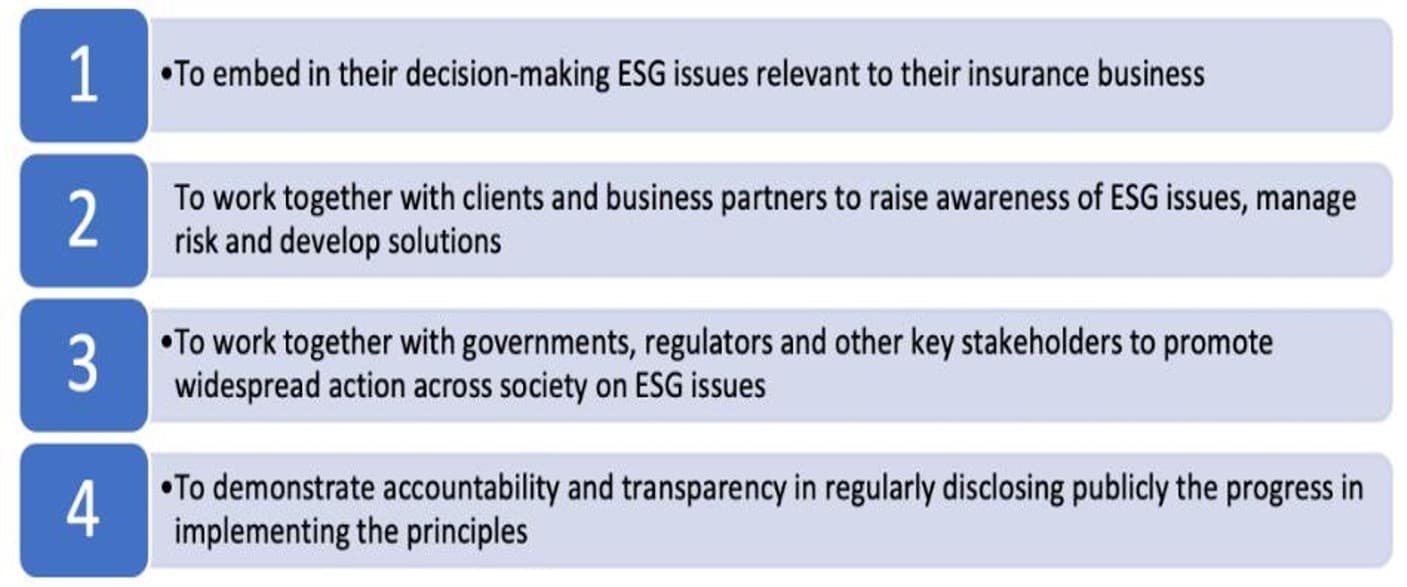
Fig. 1. Four principles for sustainable insurance developed by the United Nations in collaboration with a group of the world's largest insurance institutional investors.
In the scope of creating a green economy, the insurance market acts as an infrastructural element of the country's financial system. In addition to assuming various risks, insurers are also major investors. According to "Swiss Re" data, as of end of 2023, the total volume of the global insurance market amounted to more than 7.1 trillion USD. Besides, insurers had more than 40 trillion USD in assets under management [1]. This makes them one of the main institutional investors of finances in various objects, including objects that meet the requirements of sustainable development.
The insurance market of Uzbekistan, as part of the global insurance market, has shown positive dynamics over the last few years, both in terms of quantitative and qualitative characteristics.
As shown in Fig. 2, if for 2021 the market volume (both life and non-life) amounted to 3.7 trillion UZS, by the end of 2023 it amounted to 8.1 trillion UZS, i.e., more than 2 times. Whilst, insurance indemnifications increased by 1.6 times, from 1.2 trillion UZS in Y2021 up to 2.0 trillion UZS in Y2023. The authorized capital of insurance companies for this period increased from 1.6 trillion to 2.3 trillion UZS, and the total volume of investments – from 3.7 trillion to 6.1 trillion UZS [16].
In terms of market players, total number of insurance companies (both life and non-life) decreased from 42 down to 38 due to withdrawal of insurance license of some insurance companies, which were not fulfilling the solvency regulations (Fig. 3). However, number of insurance brokers, professionally engaged in accompanying clients during the life cycle of insurance policy, increased from 5 up to 8.

Fig. 2. Some indicators of the insurance market of Uzbekistan (in trillion UZS).
Source: compiled by the authors based on the statistical data of the insurance supervisory body of Uzbekistan.
In 2021, a new version of the Law "On Insurance Activities" was adopted in the country, which was aimed at improving the rights of consumers, increasing the transparency of activities and improving the financial stability of insurance companies, deepening the integration of the Uzbek insurance market into the international insurance community and adoption of other important qualitative changes. From the start of 2023 year the practice of issuing insurance policies in written form for all types of compulsory insurance was ceased, and from the mid of 2023 year it was allowed to carry out all types of insurance in electronic form within the framework of ongoing digitalization of the insurance market of Uzbekistan [4].
Fig. 3. Total number of some market players of the insurance market of Uzbekistan.
Source: compiled by the authors based on the statistical data of the insurance supervisory body of Uzbekistan.
Concurrently, from the point of view of introducing ESG principles into the practice of insurance companies, the insurance market of Uzbekistan is still at the initial stage. This is explained by the lack of knowledge and experience in the field of ESG, the absence of large financial resources of insurance companies and the unobviousness of increasing profits in the short-term perspective in case of introduction the ESG principles.
Moreover, the insurance market of Uzbekistan is not yet sufficiently integrated into the global insurance market, there are no insurance companies listed on foreign stock exchanges to feel ‘pressure’ from clients, partners or investors on the need to comply with ESG principles. All this, taken together, creates uncertainty for insurance companies and reduces incentives for their implementation.
Obviously, the Uzbek insurance market has a shorter history than the markets of developed countries. Therefore, insurance companies in Uzbekistan are predominantly engaged in increasing their profitability, attracting customers by any legal means, and performing public functions only if it is regulatory or reputational in nature.
The analysis of corporate websites of 10 insurance companies (only non-life insurers) as of May 20, 2024 revealed that none of the insurance companies has a separate section on their websites dedicated to sustainable development. There is also no information on whether the insurance company is a member of any international initiatives (such as CDP, UNEP PSI, etc.) or whether there have been any community activities (e.g., helping people in need of social protection). None of the insurance companies publishes annual reports (at least does not upload an online version on its website), where non-financial data on their activities can be obtained.
At the same time, it is important to emphasize that insurance companies in Uzbekistan have made significant progress in terms of disclosure of corporate governance information (G-factor). This progress is mainly due to the transition of all insurance companies to the organizational-legal form of JSC in accordance with the Law "On Insurance Activities", which requires companies to be more transparent in their activities. As a result, insurance companies started to regularly publish their financial statements together with the auditor's report, material facts about their activities, information about general meetings of shareholders, internal documents, etc.
On March 1, 2024, the Presidential Decree № PP-108 "On comprehensive measures for further development of the insurance services market" was adopted. In accordance with it, the insurance regulator was instructed to study the experience of advanced countries and make proposals until January 1, 2025 regarding the phased introduction of a system of compulsory insurance of immovable property of legal entities against natural and man-made disasters, as well as green insurance products, which should contribute to environmental protection and sustainable development.
It should be noted that the environmental factor is one of the first factors directly determining the developing trajectory of the Uzbek insurance market. The impact of environmental risks, including climate, on the country's economy can hardly be overestimated. Atmospheric pollution due to industrial enterprises and rapid deterioration of the gene pool, death of fauna, depletion of minerals and other environmental problems are discussed in various circles, including government meetings, scientific congresses, international conferences, etc. It is also known that Uzbekistan is located in an earthquakeactive zone, where there are quite a large number of settlements exposed to earthquakes of 7 to 9 points, which potentially carries risks of ecosystem degradation [25].
Table 1. Status of disclosure of some non-financial data by TOP-10* major players of the insurance market of Uzbekistan.
Name of the insurance companies | ||||||||||
|---|---|---|---|---|---|---|---|---|---|---|
Position in the market in terms of net insurance premium volume for full Y2023 | 1 | 2 | 3 | 4 | 5 | 6 | 7 | 9 | 10 | 11 |
Availability of section, related to sustainability | No | No | No | No | No | No | No | No | No | No |
Information on participation in any international organizations, regarding sustainability | No | No | No | No | No | No | No | No | No | No |
Availability of annual report for the latest reporting year (full Y2023) to learn nonfinancial information | No | No | No | No | No | No | No | No | No | No |
Availability of some internal documents (charter, code of corporate ethics, anticorruption code, etc.) | Yes | Yes | Yes | No | Yes | Yes | Yes | Yes | No | Yes |
Availability of financial statement for the latest reporting period (1Q 2024) | No | Yes | No | No | No | Yes | Yes | No | No | Yes |
Information on charity, sponsorship support | Yes | No | No | No | No | No | Yes | No | No | No |
Availability of special “green” insurance products | No | No | No | No | No | No | No | No | No | No |
Source: compiled by the authors based on the study of corporate websites of TOP-10 insurance companies in Uzbekistan.
*Authors’ note: No. 8 major player of the insurance market – JSC JV IO "Asko-Vostok" – is not included in this table due to cancellation of its license for insurance activity from November 3, 2023.
Therefore, environmental insurance in accordance with the concept of sustainable development serves as an effective mechanism that will help, on the one hand, to prevent environmental pollution, environmental disasters and catastrophes, and on the other hand, to compensate for the damage caused to the economy, enterprises and the environment in case of their occurrence.
Despite the adoption of the Law "On Nature Protection" on December 9, 1992 [13] and the Decree of the Cabinet of Ministers No. 271 dated December 10, 2008 "On additional measures to implement the Law of the Republic of Uzbekistan "On industrial safety of hazardous production facilities" [18], it cannot be said that all objects of Uzbekistan, which can potentially pose a threat to the environment and human health, are covered by environmental insurance coverage. According to the results of 2023, the share of this type of insurance amounted to 28.6 billion UZS or 0.4% of the total volume of insurance collections. The first insurance indemnity payment in the country under environmental insurance in the amount of 8 million UZS was made only in 2014 in favor of the State Committee for Nature Protection of the Republic of Uzbekistan after the dam failure in Navoi region [10].
The World Bank estimates that the Uzbek government spends 92 million USD annually on disaster response, which is the highest amount among Central Asian countries [5]. Accordingly, due to the relatively low level of penetration of environmental insurance, the state has to bear an additional financial burden. Moreover, insurers do not have accumulated experience to develop new insurance products for environmental risks, to prepare recommended methods to prevent the occurrence of such risks or environmental protection measures as a form of implementation of preventive measures used to minimize insurable risks.
Given the fact that the climate agenda, being a key element of ESG, remains one of the main regulators of the world economy and highly influences the activities of households in Uzbekistan, the need to deepen the development of the environmental insurance system becomes especially urgent. In addition to gradual introduction of the system of compulsory insurance of immovable property of exclusively legal entities against natural and man-made disasters, envisaged by the above-mentioned Presidential Decree No. PP-108, it is also necessary to adopt the Law "On Environmental Insurance", enshrining clear objectives and basic principles of environmental insurance, mechanisms of state supervision over various types of environmental insurance (including life insurance, liability insurance, property insurance in case of damage to the environment or the property and life of the insured as a result of an environmental accident and catastrophe), the procedure for concluding and executing an insurance contract, the basic foundations for creating new green insurance products (such as renewable energy insurance, aquaculture insurance), etc.
Thus, the insurance market of Uzbekistan can play a key role in addressing environmental issues, which are the most acute in the global sustainable development agenda. Moreover, insurers should not only help other companies in the transition to a green economy, but also themselves incorporate the climate agenda into the practice of corporate governance through:
- introduction of underwriting standards taking into account the compliance of insured objects with sustainable development goals;
- introduction of restrictions on investments in carbon-intensive industries;
- formation of green insurance products and creation of incentive mechanisms for their purchase by clients;
- phased transition to renewable energy sources;
- mandatory disclosure of information on actions taken in the field of environmental protection (e.g., this could be information on tree planting, full transition to electronic document management with the refusal to print papers in the office, transition of the car fleet to electric vehicles, etc.).
Certainly, ESG principles and the concept of sustainable development are much broader than environmental insurance. However, taking into account the importance of this topic in the global and local agendas, it is the development of environmental insurance that can serve as a basis for the formation of conditions for the introduction of ESG principles in the insurance market of Uzbekistan.
Insurance companies in Uzbekistan should also strengthen the consideration of social aspects (S-factor) in their activities. In the modern world, ensuring accessibility of insurance services to all segments of the population, fair and prompt settlement of insurance losses, active participation in the life of local communities through charitable initiatives become important. In recent years, the number of complaints from customers (primarily individuals) to the insurance regulator (National Agency of Perspective Projects), on online platform, consumer protection authorities has increased in the insurance market of Uzbekistan. This creates a distrust of customers in insurance services. At the same time, it cannot be said that insurance companies refuse to pay insurance compensation under far-fetched reasons. The reason lies, on the one hand, in the low insurance culture of the population (ignorance of basic insurance principles, inattentive reading of insurance terms and conditions, insurance fraud) and, on the other hand, in the low level of involvement of insurers in the process of educating the population and explaining the reasons behind their actions.
The problem of improving financial literacy and satisfaction of the population can be solved by organizing regular seminars aimed at explaining the basics of insurance, the features of different types of insurance, organized on various social platforms (Instagram, Facebook, corporate website), in higher educational institutions, at mahalla meetings. The ongoing digitalization of business processes in the insurance market should also affect the procedure of loss settlement, when the client can use a cell phone to record the moment of occurrence of an insured event and send all necessary documents (photos, online policy, etc.) to the insurance company through the mobile application of the insurance company. This practice is already applied by many foreign insurance companies (e.g., Allianz SE [2]).
It is gratifying to note that in accordance with the above-mentioned Decree of the President of the Republic of Uzbekistan № PP-108, insurance companies are obliged to annually allocate at least 3% of the payroll fund to finance the costs of staff development. Given the lack of qualified personnel in the field of application of ESG approach, it is advisable to send employees to foreign countries to obtain best practices from insurance companies that have succeeded in the implementation of ESG principles and who are the signatories of the UN "Principles of Sustainable Insurance" (such companies as Allianz SE, AIG, Zurich Insurance Group, Munich Re, Swiss Re, AXA Group and others).
What is certain is that the integrated application of ESG approaches in the daily life of an insurance company will contribute to strengthening its reputation in the market, which in turn will attract clients with a high degree of exposure to the principles of sustainable development and increase the morale and satisfaction of employees who realize the degree of their involvement in solving sustainable development problems. Although it is difficult to see quantitative and qualitative changes from the introduction of ESG principles in the company in the short term, however, in the long term it will give the company significant ‘points’ in the eyes of all involved parties (customers, employees, business partners, etc.) and may become its competitive advantage in attracting investments, increasing customer confidence in the company as a socially responsible and environmental company with high standards of corporate governance. This, in turn, may affect the quality of the insurance portfolio, improving the solvency and long-term sustainability of the insurance company (Table 2).
As part of the introduction of ESG principles into the practices of insurance companies, joint work of the insurance regulator and insurance companies is necessary. The introduction of new processes may go faster if it is insisted on by the insurance regulator, which can provide a methodology for assessing and stress-testing ESG risks, as well as improving the approaches of insurance companies to their underwriting and investment policies. A strong incentive could be the mandatory ESG rating assigned to insurance companies based on the assessment of their non-financial performance and fulfillment of sustainability criteria. Although there is no unified classification of ESG factors in the world, the national rating agency can independently determine the insurers' performance indicators that characterize their commitment to the UN "Principles of Sustainable Insurance" (e.g., transition to electronic document management, measures to save energy, voluntary insurance of environmental liability, improvement of employees' qualifications, charity, disclosure of information on ultimate beneficiaries and dividend payments, etc.).
Table 2. Use of ESG principles in the activities of Uzbek insurance companies.
Advantages | Disadvantages |
|---|---|
Improved reputation | Lack of confidence in the effectiveness and longterm benefits of implementing ESG principles |
Increased market capitalization of the company | Unrealized profit or investment income due to additional ESG costs and investment restrictions |
Development of new insurance products based on ESG principles | Lack of strong demand for “green” insurance products due to low customer awareness of the concept of sustainable development |
Long-term investment efficiency and sustainability in the long term | Additional costs to comply with ESG principles |
Increased employee motivation | Training of specialists. Constant monitoring of employees' responsibility, compliance with ethical norms within the company |
More accurate forecast of insured losses (possible losses due to man-made disasters, fines for environmental damage, legal expenses for personnel claims, etc.) | |
Improving the company's energy efficiency and reducing operating costs by saving material resources | |
Optimization of underwriting policy | |
Low exposure to regulatory risks |
Source: compiled by the authors.
Discussion
This paper raises the pivotal question on how the Uzbek insurance companies can integrate ESG principles more effectively in order to strengthen their long-term sustainability as well as to support the national strategy aimed at transition to a green economy. The investigation demonstrates that the local insurance sector is still in the early stages of implementation of ESG principles. This is explained by the lack of knowledge and experience in ESG practices, limited financial resources of insurance companies to initiate such changes and the absence of a robust regulatory framework to support these initiatives.
In the course of writing this paper, a number of questions arose. In particular, how the insurance companies can start implementation of ESG principles and how they can help other parties in their attempt to switch to a green economy? What are the clear advantages and disadvantages of introducing of such principles to local insurance companies?
Given the importance of environmental issues in the global agenda as well as in Uzbekistan, the study proposes a series of strategic steps for the Uzbek insurance sector regarding environmental insurance. These include developing comprehensive frameworks for environmental risk assessment, promoting social responsibility through inclusive insurance products, and ensuring transparency in governance structures of insurance companies. The study emphasizes the importance of improving financial literacy of population, enhancement of knowledge of insurance companies’ staff, cooperation of local insurance companies with insurance supervisory board, adoption of mandatory ESG ratings. It is emphasized that insurance companies may not see quick advantages in the short period.
However, in the long-term perspective running an insurance company in compliance with ESG principles will allow it to improve market position, attract different partners and ensure long-term sustainability.
Conclusion
In the modern world, the success of an insurance company is determined not only by its financial results, but also by the degree of compliance with high standards of corporate governance, environmental and social responsibility (ESG criteria). Consideration of moral and ethical norms in the company's philosophy becomes a determining condition for attracting foreign investments.
At present, the insurance market of Uzbekistan is only beginning to master ESG principles, which is explained by the lack of knowledge and experience in the field of ESG, the absence of a clear legal framework to support their implementation. Taking into account ESG factors throughout the entire life cycle of insurance business (from the development of insurance product to the moment of subrogation) allows to create a reputation of a company that cares not only about positive financial results, but also about the high goals of society. As the insurance market of Uzbekistan integrates into the international community, as the population becomes more concerned about security, protection of the planet, improvement of people's welfare, all stakeholders (clients, employees, shareholders, investors, etc.) in their interaction with insurance companies will give preference only to those companies that know how to find the right balance between financial and public interests.
References
- 2023 Global insurance market: premiums, profitability, risk assessment (January 18, 2024), https://medium.com/forinsurer/2023-global-insurance-market-premiumsprofitability-risk-assessment-a48406f67f4c
- Allianz launches digital claims hub and App (30 April 2020), https://www.allianz.co.uk/news-and-insight/news/allianz-launches-digital-claimshub.html
- A. Tsishchanka, How ESG could transform insurance into a more sustainable sector (April 11, 2024), https://www.propertycasualty360.com/2024/04/11/how-esg-couldtransform-insurance-into-a-more-sustainable-sector/?slreturn=20240630125722
- Decree of the President of the Republic of Uzbekistan № PP-5265 of October 23, 2021 “On additional measures on digitalization of the insurance market and development of life insurance sphere”.
- Disaster property insurance in Uzbekistan: overview and recommendations (January 2020)
- ESG considerations gaining ground in underwriting (November 21, 2023), https://www.marsh.com/en-gb/risks/climate-change-sustainability/insights/esgconsiderations-gaining-ground-in-underwriting.html
- ESG in insurance: Insured emissions (KPMG International, 2023), https://assets.kpmg.com/content/dam/kpmg/xx/pdf/2023/08/esg-in-insured-emissionsweb.pdf
- ESG in insurance: Insured emissions. Strategy and transformation (KPMG, 2023), https://assets.kpmg.com/content/dam/kpmg/xx/pdf/2023/06/kpmgi-fy23-Insurance-esgstrategytransformation-final.pdf
- ESG transformation. Environmental, social, and governance reporting in insurance (Deloitte, 2022), https://www2.deloitte.com/us/en/pages/financial-services/articles/esginsurance-governance.html
- In Uzbekistan the first insurance compensation for environmental damage was paid (May 27, 2014), https://anhor.uz/events/v-uzbekistane-viplacheno-pervoe-strahovoevozmeshenie-za-vred-nanesenniy-ekologii/
- J. Dobiac, Sustainable/ESG investing in insurance: Frequently asked questions (8 December, 2023), https://www.milliman.com/en/insight/sustainable-esg-investinginsurance-frequently-asked-questions
- N.V. Kirillova, ESG in Russian insurance companies. Insurance Business 9, 13 (2023)
- Law of the Republic of Uzbekistan No. 754-XII of December 9, 1992 "On Nature Protection", https://lex.uz/ru/docs/7065
- Managing environmental, social and governance risks in non-life insurance business (Allianz, July 2020), https://www.unepfi.org/insurance/insurance/projects/guidance-onthe-integration-of-esg-risks-into-insurance-underwriting/
- N. Hassan, ESG in insurance: how to keep up with ESG risks (GrantThornton, 2023), https://www.grantthornton.co.uk/insights/esg-in-insurance-how-to-keep-up-with-esgrisks/
- O'zbekiston Respublikasi sug'urta bozorining 2023-yil yakunlari bo'yicha umumiy ko'rsatkichlari. NAPP.
- Principles for Sustainable Insurance. A global framework for the insurance industry to address ESG risks and opportunities, https://www.unepfi.org/insurance/insurance/
- Resolution of the Cabinet of Ministers of the Republic of Uzbekistan No. 271 of
December 10, 2008 "On additional measures to implement the law of the Republic of Uzbekistan”, "On industrial safety of hazardous production facilities", https://lex.uz/docs/1413933#1415460
- Report of the World Commission on Environment and Development: Our Common Future. Oslo, March 20, 1987.
- S. Holliday, I. Remizova, F. Stewart, The insurance sector’s contribution to the sustainable development goals (SDGs) (World Bank Group. June 2021), https://documents1.worldbank.org/curated/en/560821632197166715/pdf/The-
Insurance-Sector-s-Contribution-to-the-Sustainable-Development-Goals-SDGs.pdf
- Secretary General launches Principles for Responsible Investment, supported by the world's largest investors (April 27, 2006), https://www.un.org/press/en/2006/sg2111.doc.htm
- Sustainable development 20 years after the Earth Summit (United Nations, March 2012)
- Sustainable. Green Insurance Products (Deloitte Consulting LLP. Casualty Actuarial Society E-Forum, Winter 2014)
- The insurance industry’s path to ESG impact (Deloitte. 2023), https://www2.deloitte.com/content/dam/Deloitte/ca/Documents/financialservices/EN_FSI_Insurance_ESG_POV_V6_AODA.pdf
- The list of cities and settlements of Uzbekistan located in seismically active zones (March 24, 2023), https://kun.uz/ru/news/2023/03/24/obnarodovan-spisok-gorodov-inaselennyx-punktov-uzbekistana-raspolojyennyx-v-seysmoaktivnyx-zonax
- The predictive power of ESG in insurance (Allianz, 2018), https://commercial.allianz.com/news-and-insights/expert-risk-articles/the-predictivepower-of-esg-for-insurance.html
- The role of insurance in sustainable economic and social development (PriceWaterHouseCoopers, 2020), https://www.pwc.ch/en/publications/2020/roleinsurance-in-sustainable-economic-social-development.pdf
- A.A. Tsyganov, Modern level of recognition of ESG principles by consumers of financial and insurance services in Russia. Insurance Business 10, 27 (2023)
- Sustainability and the processes, incentives and culture of the financial system. Research report. Financing a sustainability European economy. July 1, 2017 (pp. 18-30)
- H.S. Umarov. The role of the ESG concept in the context of ensuring sustainable development of the global community. Economics and Management: Problems, Solutions 2, 37 (2022)
- Who cares, wins. Connecting financial markets to a changing world. The global compact (World Bank, December 2004)
Хасан Умаров